

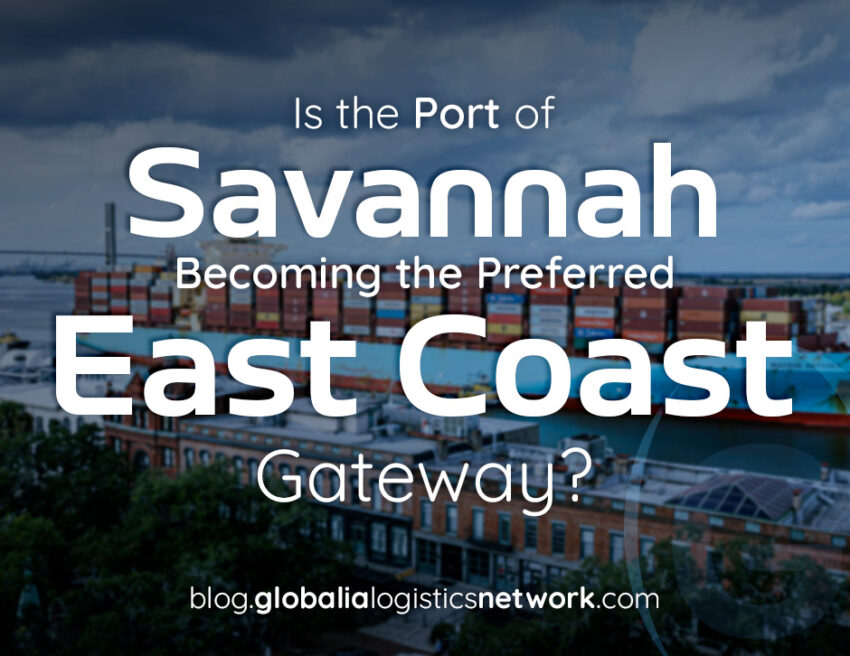
The question of the Port of Savannah becoming the preferred East Coast gateway is coming up more often in logistics conversations, and not without reason. Over the past few years, Savannah has moved from being a strong regional port to a serious contender in national supply chain strategy. For freight forwarders, this shift is not just about volume. It is about positioning, access, and long-term trade planning. What makes this question relevant today is the way global supply chains are being reshaped. Importers are looking beyond traditional gateways and reassessing how cargo moves inland. In that context, Savannah is no longer an alternative. It is increasingly part of the first choice.
Why the Port of Savannah is Gaining Ground
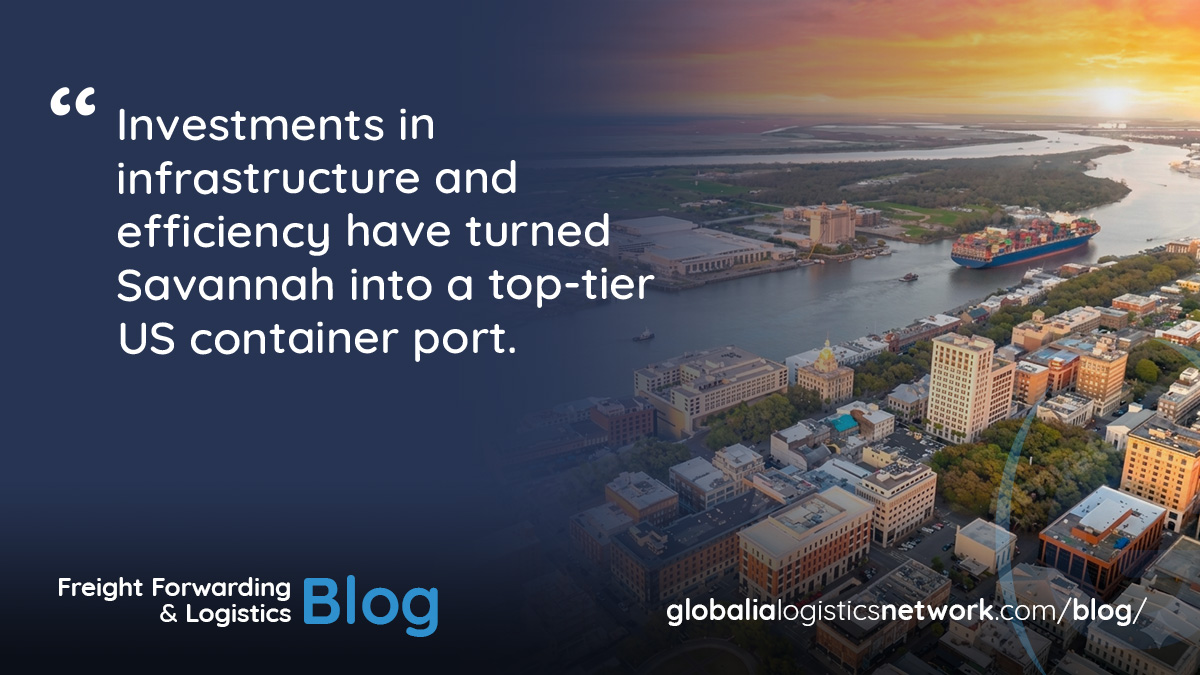
Growth at the Port of Savannah has been steady and deliberate. Investments in infrastructure, terminal expansion, and operational efficiency have turned it into one of the fastest-growing container ports in the United States. The port’s Garden City Terminal is one of the largest single container terminals in North America. This scale allows for higher throughput while maintaining operational flow. For freight forwarders, that translates into predictability, which has become a critical factor in port selection. Location plays an equally important role. Positioned along the southeastern coast, Savannah provides direct access to a rapidly expanding consumer and industrial base. The US Southeast has seen sustained growth in manufacturing, retail distribution, and e-commerce fulfillment. This makes Savannah not just a port of entry, but a strategic distribution hub.
The Shift in East Coast Port Strategy
The question is the Port of Savannah becoming the preferred East Coast gateway cannot be answered in isolation. It needs to be seen in comparison with other major ports such as New York and Charleston. New York and New Jersey continue to handle significant volumes, supported by proximity to dense population centers. At the same time, congestion, higher costs, and inland transport complexities have pushed importers to explore alternatives.
Savannah offers a different model. Instead of focusing only on port throughput, it integrates port operations with inland logistics. Rail connectivity through the Mason Mega Rail Terminal allows cargo to move efficiently into the Midwest and beyond. This reduces dependence on long-haul trucking and creates a more balanced distribution strategy. Charleston, on the other hand, presents strong competition within the Southeast. Yet Savannah’s scale, combined with its aggressive expansion plans, gives it a distinct edge in handling larger volumes over time.
Distribution Efficiency and Total Landed Cost
For many importers, port selection is no longer just about ocean freight. It is about the total landed cost. This includes port handling, inland transport, storage, and delivery timelines. Savannah performs well in this broader equation. Its proximity to major distribution centers across Georgia and neighboring states reduces transit time after discharge. Large retailers and logistics providers have already built extensive warehouse networks around Savannah, reinforcing its role in supply chain planning. For freight forwarders, this creates an opportunity to offer more than just port-to-port services. It allows them to participate in end-to-end logistics solutions, which is where margins and long-term client relationships are built.
What This Means for Freight Forwarders
The relevance of the question is that the Port of Savannah becoming the preferred East Coast gateway becomes clearer when viewed from a forwarder’s perspective. Forwarders operating through Savannah are increasingly involved in high-volume, time-sensitive shipments. Retail imports, e-commerce cargo, and consolidated shipments moving into the Southeast all depend on smooth coordination between port operations and inland delivery. This environment rewards forwarders who can offer consistency across the entire shipment lifecycle. It is not just about securing space on a vessel. It is about ensuring that cargo moves efficiently after arrival, reaches distribution centers on time, and maintains visibility throughout the process. As volumes grow, so does the complexity of coordination. Multiple stakeholders, tighter timelines, and larger shipment sizes require a more structured approach to partnerships.
The Role of Reliable Global Partnerships
Rising container volumes, expanding terminal capacity, and the growing importance of the US Southeast are reshaping how freight forwarders operate around Savannah. The Port of Savannah has moved well beyond being a regional gateway. It now sits at the center of high-volume import flows, especially for retail, e-commerce, and distribution-driven supply chains. In this kind of environment, scale brings opportunity, and also pressure. Larger volumes mean tighter timelines, more coordination across inland networks, and greater dependence on reliable partners at origin and destination. For forwarders, the difference between smooth execution and operational friction often comes down to one thing: the strength of their network. This is where being part of a global freight network like Globalia Logistics Network becomes a practical advantage. It strengthens your ability to operate efficiently in a market where consistency, speed, and coordination define success. Here’s how that translates for forwarders in Savannah:
Territorial exclusivity
Globalia Logistics Network limits membership to one agent per city or port. That means you would be the sole representative from Savannah within the network. In a fast-growing gateway handling increasing import volumes into the US Southeast, this exclusivity gives you a clear competitive position. Partners looking for a reliable contact in Savannah know exactly who to work with, which increases your visibility and inbound business potential.
A stronger global reach
Globalia Logistics Network connects you with vetted partners in more than 175 territories worldwide. For forwarders operating through Savannah, this means extending your reach far beyond the US market. You are not just managing shipments through a single port, you are part of a structured global network built on cooperation and trust.
Consistent flow of opportunities
As cargo volumes continue to grow through the Port of Savannah, maintaining a steady pipeline of business becomes increasingly important. Globalia Logistics Network fosters collaboration among members, encouraging the exchange of shipments, leads, and project opportunities. For Savannah-based forwarders, this creates access to international business that aligns with the port’s expanding role as a major US gateway.
Tools, visibility, and operational support
Globalia Logistics Network supports its members with practical resources designed to enhance day-to-day operations. From digital tools that simplify processes like quotation management to PR services that increase your company’s global visibility, the network helps you stay competitive in a high-volume environment. The head office also remains actively involved, offering support and guidance when needed.
Face-to-face connections that build long-term partnerships
Even as logistics becomes more digital, relationships remain central to the business. Globalia’s Annual Meetings bring members together for structured one-to-one meetings, creating opportunities to build direct, long-term partnerships. For forwarders in Savannah, where coordination across multiple markets is essential, these connections help strengthen trust and improve collaboration across the supply chain.
Scaling with Confidence
Savannah’s growth trajectory suggests that its role in global trade will continue to expand. Ongoing investments in infrastructure, including berth expansions and improved rail capacity, indicate a long-term commitment to handling increasing volumes. For freight forwarders, this creates both opportunity and responsibility. The opportunity lies in access to growing trade flows. The responsibility lies in maintaining service standards as scale increases. Forwarders who adapt to this environment focus on building reliable systems rather than relying on reactive solutions. They invest in partnerships, streamline processes, and align with networks that support their growth.
Looking Ahead
The question is the Port of Savannah becoming the preferred East Coast gateway reflects a broader shift in how supply chains are structured. The answer depends on how importers and forwarders continue to balance cost, efficiency, and market access. Savannah’s combination of scale, connectivity, and regional advantage places it in a strong position. It offers a model that aligns with current logistics priorities, especially for companies targeting the US Southeast. For freight forwarders, the focus is not just on choosing the right port. It is on building the right ecosystem around that choice. Those who do this effectively are the ones who turn port advantages into long-term business growth. As trade patterns continue to evolve, Savannah stands as a reminder that logistics decisions are no longer fixed. They are strategic, and they are constantly being redefined.