
Port congestion is one of those problems that is entirely predictable in the abstract and almost never predictable in the specific. You know it will happen somewhere, eventually, to some trade lane you rely on. You just don’t know exactly when, or which port, or how bad it will get. That uncertainty is exactly why a backup plan built in advance is worth so much more than a good improvisation built under pressure. Here is a practical guide to putting one together.
The Scale of What’s Happening Right Now
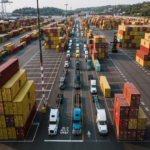
To understand why this matters, it helps to look at just how widespread congestion has become. Global tracking data shows that the large majority of the world’s monitored container ports are currently experiencing elevated congestion levels, with a significant share facing severe delays, and average vessel wait times ranging from just a few hours at the most efficient hubs to well over a month at the worst-affected ones.
Africa has been hit especially hard, with regional wait times pushed higher by cargo rerouting away from Middle East disruptions, while pockets of Asia and Europe are seeing delays stretching several weeks at individual terminals. The Red Sea crisis continues to ripple through the system too, pushing vessels around the Cape of Good Hope and bunching arrivals at hubs like Singapore and Rotterdam, which has driven the share of the global container fleet sitting idle at anchorage to its highest level in years.
Even ports that look relatively calm on paper are often only appearing that way because carriers have quietly built extra buffer time into their published schedules to absorb the disruption, which means the headline delay numbers can understate how strained the system really is underneath.
In Europe, Rotterdam and Hamburg have reported multi-day vessel wait times through the first half of the year, while Antwerp has emerged as a comparatively cleaner alternative for cargo bound for Northern Europe. On the US side, ports including New York and Savannah have run intermittent multi-day backlogs even as Long Beach and Los Angeles have handled volume more smoothly. None of this is a single crisis with a single cause. It is a mix of vessel bunching, labor disruptions, geopolitical rerouting, inspection backlogs, and aging infrastructure straining under record cargo volumes, all overlapping at different ports at different times. That is precisely why a static plan built around “our regular port will be fine” no longer holds up, and why a real backup plan needs to be built before you need it, not while you’re watching a vessel sit at anchor.
Why Waiting Until Congestion Hits Is Already Too Late
By the time a port shows up in the news for congestion, the damage to your options has usually already started. Alternate carriers, rerouted vessel space, and inland transport capacity at nearby ports all get booked up fast once congestion becomes visible, because every other shipper affected by the same bottleneck is reaching for the same limited alternatives at the same time. A backup plan built after the fact is really just you competing for scraps. A backup plan built in advance means you already have the relationships and the routing knowledge in place before the rush starts.
Building Visibility Into Your Routes
The first real step is tracking congestion indicators for the specific ports your freight actually moves through, rather than relying on general news headlines. Vessel queue times, average anchorage wait times, and yard dwell times are all published or trackable through freight visibility platforms and carrier updates. The goal is to have a data-driven trigger point, a specific threshold where your team knows to activate the backup plan, rather than waiting for a shipment to already be stuck before reacting.
Identifying Alternate Ports and Routings in Advance
Every primary port you rely on should have at least one viable alternate mapped out before you need it. That means understanding not just which nearby port could theoretically handle your cargo, but the practical differences in using it: different drayage costs, different rail or trucking access to your final destination, and different customs handling procedures if the alternate port is in a different country or region. Mapping this out in a calm moment, rather than during an active disruption, means you can make a clear-headed decision instead of a rushed one.
Diversifying Carrier and Routing Relationships
Relying on a single carrier or a single trade lane for critical cargo leaves you with no real flexibility when that specific lane hits trouble. Spreading volume across two or three reliable carrier relationships, even if one is your clear primary, means you already have a working relationship and a booking history with an alternate when you need to shift volume quickly. Carriers are naturally more responsive to shippers they already have an active relationship with than to a new customer showing up mid-crisis asking for space.
Building Inventory and Timeline Buffers
The routing side of a backup plan only helps if your inventory planning gives it room to work. Many supply chain teams have moved from the traditional two to three week safety stock buffer toward a more conservative four to six week buffer for fast-moving or margin-critical goods, specifically because transit time variability has become the norm rather than the exception. Building slightly longer lead times into your ordering cycle, particularly ahead of known seasonal pressure points, gives your backup routing plan the breathing room to actually work.
A Real Example
Consider a retailer sourcing seasonal goods from Asia that normally routes everything through a single major transshipment hub. When that hub experienced a sudden spike in vessel bunching and yard congestion during a peak shipping period, most shippers using it were waiting weeks for space to clear. A retailer that had already mapped an alternate routing through a secondary port, with an existing relationship with a carrier serving that lane, was able to shift a portion of its volume within days rather than weeks. The inventory buffer it had built in absorbed the remaining delay without triggering stockouts. None of this happened by luck. It happened because the plan existed before the congestion did.
Wrapping up
A backup plan you never end up needing costs you a little time spent mapping it out and maintaining a secondary carrier relationship. A backup plan you need and don’t have costs you weeks of delay, emergency freight premiums, and strained customer relationships, at exactly the moment you can least afford any of it. Given how widespread and unpredictable port congestion has become across the current shipping landscape, building that plan now is one of the more straightforward risk-reduction moves a shipping team can make.