

The Great Lakes offer international freight forwarders an important route into the American Midwest, connecting global markets with manufacturing centres, industrial facilities, and major distribution hubs. Located on Lake Erie, the Port of Cleveland provides access to this extensive regional economy through maritime shipping, rail, and road transportation. For freight forwarders handling industrial equipment, steel, project cargo, and containerized goods, understanding the port’s capabilities can reveal opportunities to develop new trade lanes and offer customers alternative shipping solutions. As supply chains evolve and shippers look for greater flexibility in transportation planning, the Port of Cleveland deserves attention as more than a regional shipping facility. Its location, specialized cargo-handling infrastructure, and connections to inland markets make it a useful gateway for international freight movements into and out of the U.S. heartland.
Why the Port of Cleveland Matters to International Trade
The Port of Cleveland sits at the intersection of Lake Erie and the Cuyahoga River, connecting Northeast Ohio with the Great Lakes–St. Lawrence Seaway system and international markets. It is one of the major commercial ports on the Great Lakes and supports the movement of a diverse range of commodities serving regional industries.
The port’s importance extends beyond Ohio. Its location gives shippers access to major Midwest markets, including Columbus, Cincinnati, Detroit, Pittsburgh, Indianapolis, and Chicago. According to the port authority, approximately half of U.S. households, businesses, and manufacturing plants are within an eight-hour drive of the port. This reach makes Cleveland relevant for freight forwarders coordinating deliveries to industrial customers and distribution facilities across a broad geographic area.
For international agents, this regional connectivity creates opportunities to develop end-to-end logistics solutions rather than focusing solely on ocean transportation. A shipment arriving through Cleveland can be coordinated with inland rail or trucking services to reach its final destination, provided the cargo, routing, and delivery requirements are suitable. The port also offers an alternative to routing certain shipments through coastal gateways. Depending on the origin, destination, vessel service, cargo type, and schedule, a Great Lakes route may provide advantages in transit time, congestion, or inland transportation costs. These benefits should be assessed on a shipment-by-shipment basis.
What Types of Cargo Can Move Through the Port of Cleveland?
One of the port’s key advantages is its ability to handle different cargo categories through specialized facilities. This creates opportunities for freight forwarders serving manufacturing, construction, energy, and other industrial sectors.
Breakbulk and Project Cargo
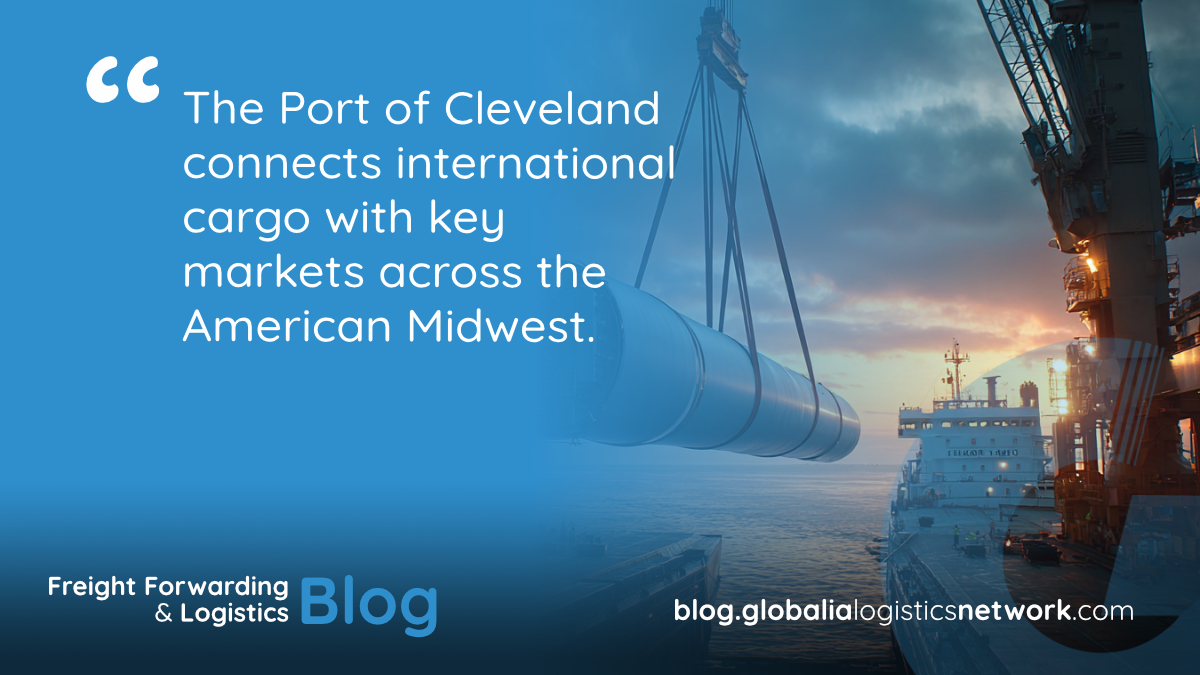
The port’s general cargo terminal handles breakbulk shipments and oversized cargo, including steel products, heavy machinery, manufacturing equipment, power generators, and wind-energy components. Its facilities include mobile harbor cranes, indoor storage, outdoor laydown areas, and rail connections. These capabilities make Cleveland relevant for project cargo logistics, where shipments may require special lifting arrangements, coordinated inland transportation, and careful planning around dimensions and weight.
Freight forwarders managing such movements must consider equipment availability, cargo securing, handling requirements, permits for oversized road transport, and delivery-site access. Coordinating these details early can help reduce delays and ensure that cargo moves safely between the port and its final destination.
Steel and Industrial Materials
Steel and other industrial materials are important cargo categories for the Great Lakes region. Cleveland’s manufacturing base creates demand for the movement of raw materials, semi-finished products, and equipment used in industrial operations. Forwarders working with steel coils, plates, structural components, or machinery should pay particular attention to cargo weight, handling methods, moisture protection, storage conditions, and suitable transport equipment. Understanding these requirements can help logistics providers develop more accurate quotations and reliable shipping plans.
Dry Bulk Cargo
The port’s bulk terminal handles commodities such as iron ore, limestone, cement, and salt. These materials support construction, steel production, and other industrial activities across the region. Although dry bulk operations differ from conventional freight forwarding, they demonstrate the diversity of cargo moving through Cleveland Harbor. Forwarders serving industrial customers can benefit from understanding the broader logistics ecosystem and identifying opportunities to coordinate related transportation, warehousing, or equipment movements.
Containerized Cargo
Cleveland also supports containerized freight, connecting the Great Lakes region with overseas markets through available vessel services. Container routing and sailing frequency should always be confirmed with carriers, as service availability can vary. For freight forwarders, containerized shipping through Cleveland may be worth evaluating when the origin, destination, cargo profile, and inland connections align with the available service. Comparing the full journey against alternative port routings is essential before recommending an option to a customer.
Rail and Road Connections: Moving Cargo Beyond the Port
A port’s value depends not only on its waterfront facilities but also on how efficiently cargo can move inland. Cleveland benefits from direct connections to two major U.S. freight railroads, CSX and Norfolk Southern, alongside a road network serving key Midwest markets. The general cargo terminal has on-dock rail access, allowing suitable shipments to transfer between vessels and rail services. Trucks can also connect the port with Interstate 90 and other major highways, supporting regional distribution and delivery to manufacturing sites.
For freight forwarders, these multimodal connections provide flexibility when designing transportation plans. Rail may suit certain heavy or longer-distance movements, while trucking can offer the flexibility required for final-mile delivery. The most suitable combination depends on cargo characteristics, delivery deadlines, handling requirements, and total transport costs.
When planning a shipment through Cleveland, forwarders should evaluate:
- Route suitability: Compare the available maritime service and inland connections against alternative gateways.
- Cargo handling: Confirm that the port and onward carriers can accommodate the shipment’s dimensions, weight, and handling requirements.
- Transit times: Account for vessel schedules, cargo transfers, rail availability, and final delivery arrangements.
- Total logistics costs: Consider port handling, storage, inland transport, documentation, and any additional service requirements.
- Seasonal considerations: Check Great Lakes navigation schedules and service availability when planning time-sensitive shipments.
Taking this broader approach allows forwarders to assess whether Cleveland offers a practical advantage for a particular shipment rather than selecting a route based on port location alone.
How Freight Forwarders Can Unlock More Opportunities Through Cleveland
Understanding a port’s capabilities is only the first step. To turn that knowledge into business, freight forwarders need relationships with local agents, carriers, customs brokers, and logistics providers who can coordinate each part of the shipment. For overseas forwarders, a reliable Cleveland partner can provide local knowledge, arrange inland transportation, coordinate cargo handling, and help clarify operational requirements. Similarly, a Cleveland-based forwarder can benefit from international partners who understand origin-country procedures and can support customers shipping goods into the United States.
This cooperation becomes particularly valuable for complex movements involving project cargo, heavy machinery, or industrial materials. When several service providers are involved, clear communication and well-defined responsibilities help reduce operational uncertainty. Forwarders should also keep customers informed about routing alternatives, documentation requirements, and potential scheduling constraints. Providing a realistic assessment of the available options helps customers make informed decisions and builds confidence in the logistics service.
Growing International Partnerships Through Globalia Logistics Network
For independent freight forwarders, expanding into new markets often means finding dependable overseas agents, assessing their capabilities, and building trust over time. A global logistics network can simplify this process by connecting members with established partners in important trade destinations.
Globalia Logistics Network brings independent freight forwarders together to encourage international cooperation, shipment referrals, and long-term business relationships. All Globalia members are handpicked based on their experience, strength, and financial credibility, ensuring that members get to collaborate with the best international forwarders. For freight forwarders in Cleveland, membership can create opportunities to connect with agents across international markets, develop new import and export business, and coordinate shipments with partners who understand local operating conditions. Overseas members can also benefit from working with a Cleveland agent familiar with the region’s port facilities, industrial cargo requirements, and inland transportation options.
Globalia supports collaboration through initiatives such as its one-to-one business meetings at Annual Meetings, member marketing opportunities, digital tools, and operational support. These resources help members develop stronger professional relationships and identify potential business opportunities beyond their existing customer base.
In a market where successful freight forwarding depends on reliable coordination across borders, having trusted partners at both ends of a shipment can make international business easier to manage and expand.
Making the Most of Cleveland’s Great Lakes Advantage
The Port of Cleveland offers international freight forwarders access to a distinctive combination of Great Lakes shipping, specialized cargo-handling facilities, and connections to the American Midwest. From steel and industrial machinery to breakbulk, project cargo, and containerized goods, its capabilities create opportunities for logistics providers serving a range of industries. However, every routing decision requires careful evaluation. Vessel schedules, cargo suitability, inland transportation, seasonal navigation, and total logistics costs all influence whether Cleveland is the right gateway for a shipment. By understanding the port’s strengths and building dependable relationships with local and international partners, freight forwarders can identify new trade opportunities, develop more flexible shipping solutions, and strengthen their position in global supply chains.