

The Port of Karachi container congestion issue has become a recurring concern for logistics providers managing cargo flows to and from Pakistan. As the country’s busiest maritime gateway, the port handles a substantial share of the nation’s imports and exports, making it a vital node in regional and global supply chains. For freight forwarders coordinating shipments between the United States, Europe, the Middle East, and South Asia, understanding the operational realities of Karachi’s port infrastructure is essential. Periodic congestion can create delays, disrupt schedules, and increase logistics costs across entire supply chains. Despite these challenges, the port remains one of the most important maritime gateways in the region. Its strategic location, strong trade connections, and role in Pakistan’s economy ensure that it continues to handle significant volumes of international cargo.
Why the Port of Karachi Matters in Regional Trade
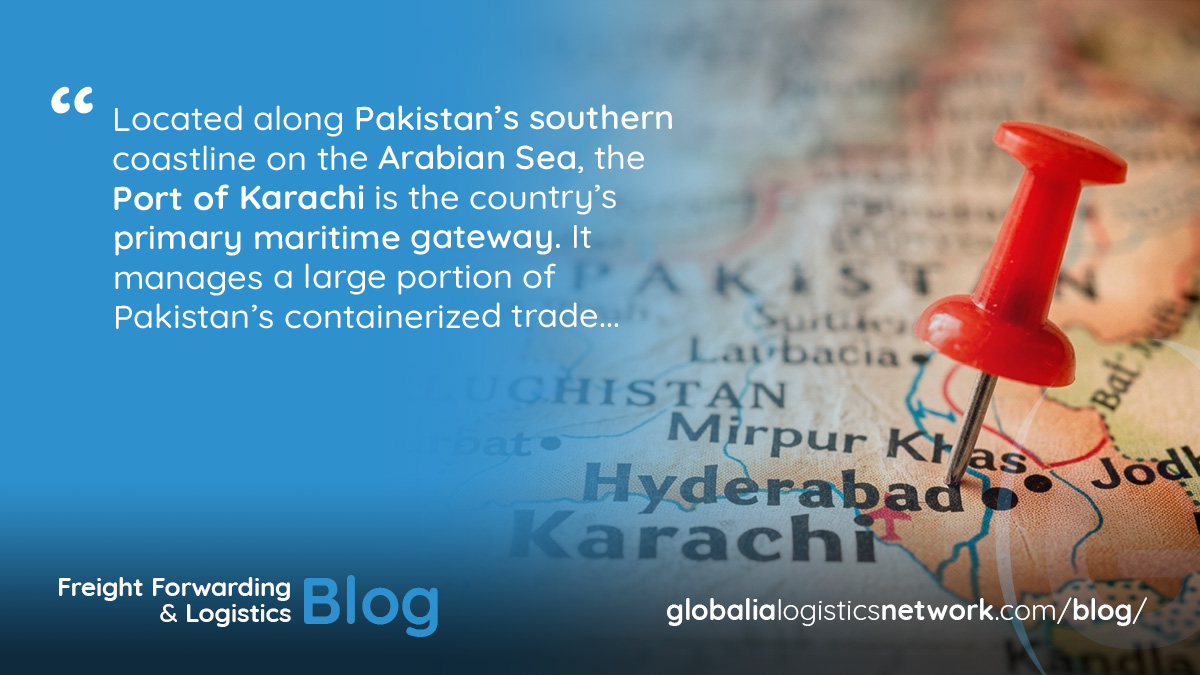
Located along Pakistan’s southern coastline on the Arabian Sea, the Port of Karachi is the country’s primary maritime gateway. It manages a large portion of Pakistan’s containerized trade and connects the country to major global shipping routes. The port also serves the commercial needs of Pakistan’s largest city, Karachi, which functions as the country’s financial and industrial center. From textiles and agricultural products to machinery and electronics, a wide variety of cargo moves through the port each day. In addition to domestic trade, Karachi plays an important role in regional logistics. The port acts as a transit hub for cargo moving toward neighboring countries such as Afghanistan and other parts of Central Asia. This adds further pressure to an already busy shipping gateway. Because of this strategic role, disruptions such as Pakistan container shipping delays or terminal bottlenecks can have ripple effects across international trade routes.
Causes of Port of Karachi Container Congestion
Several operational and structural factors contribute to Port of Karachi container congestion, and understanding these issues helps freight forwarders anticipate potential delays.
1. Surges in import volumes
Pakistan periodically experiences spikes in import cargo, especially in sectors such as machinery, electronics, and consumer goods. These sudden increases can overwhelm port handling capacity and lead to temporary container backlogs.
2. Limited terminal capacity
Although the port has undergone modernization in recent years, container terminals can still face capacity constraints during peak periods. When vessel arrivals exceed available berth space or yard capacity, ships may need to wait offshore.
3. Documentation and customs delays
Another contributing factor to Karachi port congestion logistics involves delays in documentation and customs clearance processes. When containers remain at the terminal for extended periods awaiting clearance, yard space becomes limited and container turnover slows down.
4. Inland transport bottlenecks
Cargo leaving the port depends on efficient road and rail networks. Traffic congestion, equipment shortages, or inland transportation delays can prevent containers from being evacuated quickly, increasing the risk of a container backlog at Karachi port.
How Congestion Impacts Freight Forwarders
For logistics providers managing international shipments, Port of Karachi container congestion can create several operational challenges.
Longer transit times
Vessel waiting times and terminal delays can extend overall shipping schedules. For time-sensitive shipments, particularly in sectors such as textiles or manufacturing components, this can disrupt production timelines.
Higher logistics costs
Congestion often leads to additional charges, including demurrage, detention, and storage fees. Freight forwarders must carefully coordinate cargo movements to minimize these costs.
Schedule uncertainty
Unpredictable delays can complicate planning for connecting shipments. When cargo arriving at Karachi is destined for inland cities or neighboring countries, even small delays at the port can create cascading disruptions along the supply chain.
These issues make it essential for forwarders involved in Pakistan import export logistics to maintain strong communication with shipping lines, port authorities, and overseas partners.
Practical Strategies for Managing Congestion Risks
While congestion cannot always be avoided, freight forwarders can take several steps to reduce the impact of delays.
– Advance documentation preparation
– Ensuring that customs paperwork and shipping documentation are completed before cargo arrival helps speed up clearance procedures and reduces the time containers remain at the terminal.
– Flexible routing options
– Some shipments may benefit from alternative routing strategies that incorporate other regional ports when feasible.
– Close coordination with local partners
– Working with experienced local logistics providers familiar with freight forwarding at Karachi port can help companies navigate operational challenges more effectively.
These strategies become particularly important for forwarders operating across multiple international markets.
Why Global Partnerships Matter for Forwarders in Karachi
Given the international nature of shipping routes connected to Pakistan, strong global partnerships are essential for freight forwarders handling cargo through Karachi. One example is Globalia Logistics Network, a global freight forwarders alliance that connects independent logistics companies across nearly 190 cities worldwide. Established more than ten years ago, the network has built a solid reputation within the logistics industry, giving members access to reliable partners and a trusted collaborative environment.
For freight forwarders in Karachi, joining a network like Globalia offers several practical advantages. The network provides territorial exclusivity, meaning each major city is represented by a single member. This allows companies to develop stable partnerships without direct competition within the same location. Members also gain access to carefully vetted partners across international markets. When coordinating complex shipments or dealing with disruptions such as port congestion, having dependable overseas partners becomes extremely valuable.
Another major benefit is Globalia’s Annual Meetings, where members gather in person to strengthen relationships, exchange business opportunities, and discuss logistics trends. These meetings create an environment where forwarders can establish trust and build long-term cooperation. For companies navigating Karachi port supply chain challenges, these global connections help ensure smoother coordination across multiple countries and transport modes.
The Outlook for Karachi’s Maritime Logistics
Despite the operational pressures created by Port of Karachi container congestion, the port remains an indispensable component of Pakistan’s logistics infrastructure. Ongoing modernization efforts, digitalization initiatives, and investments in port facilities aim to improve efficiency and expand cargo handling capacity. At the same time, international trade flows in South Asia continue to grow, ensuring that Karachi will remain a central hub for maritime commerce. For freight forwarders operating in global logistics networks, understanding the operational dynamics of major gateways like Karachi is critical. By combining local expertise, careful planning, and strong international partnerships, forwarders can successfully navigate congestion challenges while continuing to support the flow of international trade.