

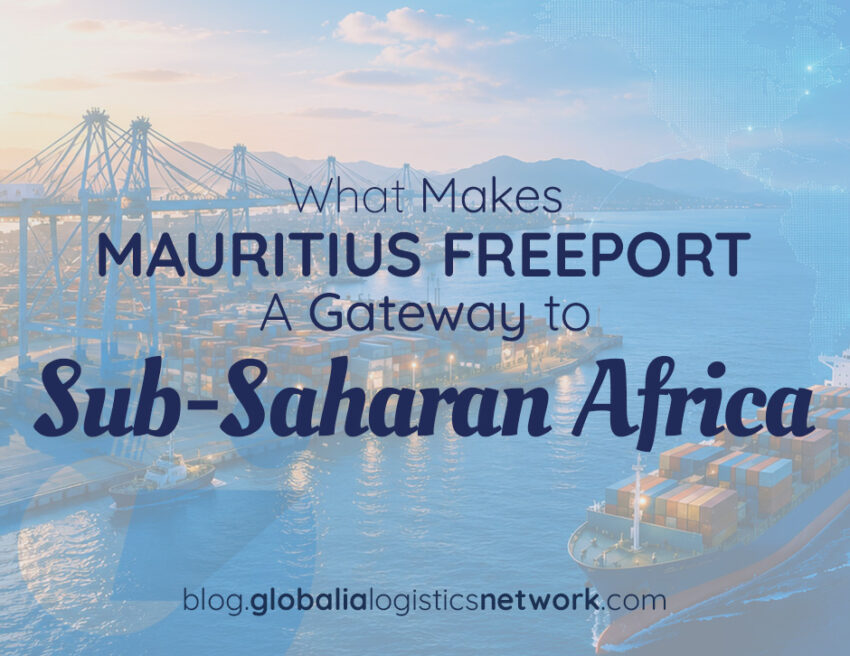
For freight forwarders looking to expand into Sub-Saharan African markets, the Mauritius Freeport deserves a closer look. Mauritius has spent the past two decades positioning itself deliberately as a logistics bridge between Asia, the Middle East, and the African continent, and the Freeport is the mechanism that makes this possible in practical terms.
Why the Mauritius Freeport Matters for African Trade
Port Louis sits on the northwest coast of Mauritius and functions as a key maritime gateway in the Indian Ocean, positioned between Africa and Asia. The Mauritius Container Terminal, at the entrance of the harbour, connects African, Australian, and Asian trade along established south-south shipping routes. This is backed by real capacity. The port now handles an annual container throughput approaching 400,000 TEU and includes modern gantry cranes capable of serving large vessels, along with a dedicated bulk sugar terminal and cruise terminal. Mauritius is also one of the deepest ports in the southwest Indian Ocean, able to accommodate container vessels with drafts of around 15 metres and capacities up to 12,000 TEU, giving it genuine standing as a transshipment point rather than a minor regional stop.
The Mauritius Freeport: Where the Real Opportunity Lives
For forwarders, the Mauritius Freeport is the most practically useful part of this story. Freeport developers manage well over 140,000 square metres of warehousing, industrial, and office space located directly beside the container terminal and the international airport. Companies operating within the Freeport benefit from a fiscal environment built around duty-free and VAT-free imports, full foreign ownership, no exchange controls, and unrestricted re-export.
The more important detail for anyone advising clients on African market entry is this: goods that undergo sufficient value addition or transformation within Mauritius can qualify for preferential tariff access under both the SADC and COMESA trade frameworks. In practice, this means cargo processed through the Mauritius Freeport can enter Southern and Eastern African markets on better terms than direct shipment from Asia or Europe would allow.
Real Businesses, Real Routes
This is not a theoretical advantage. Several well-known international brands already route African distribution through Mauritius. A major European sporting goods retailer chose Mauritius as its regional base, building a large-scale warehouse specifically to serve African and Middle Eastern demand. A global packaging manufacturer and a South African retail chain also operate distribution functions from the same Freeport zone, using it to reach East African markets more efficiently than they could from a single mainland base.
Consider what this looks like operationally for a forwarder’s client. A consumer goods importer bringing product in from Asia does not need to ship directly and separately into each African market it serves. Cargo can move first to Port Louis, clear through the Freeport under duty deferral, undergo labeling, light assembly, or repackaging to meet local origin requirements, and then redistribute onward to markets like Kenya, South Africa, or Mozambique under preferential tariff treatment. For the forwarder managing this, Mauritius becomes one coordination point instead of a dozen separate customs processes across the continent.
A second example is worth noting. An industrial equipment distributor sourcing components from Southeast Asia for East African buyers can use Freeport warehousing to consolidate multiple shipments, hold inventory closer to demand, and release cargo into destination markets only as orders confirm. This reduces the working capital otherwise tied up in transit stock scattered across multiple ports.
Sea-Air Connectivity Adds Flexibility
Mauritius’s international airport sits adjacent to the port and connects daily to major global business centres, enabling combined sea-air logistics solutions. For time-sensitive cargo bound for African markets, this pairing gives forwarders options a pure seaport hub cannot offer. Bulk or lower-urgency freight can move by sea into the Freeport, while urgent components or high-value goods continue by air, all coordinated from the same operational base.
Investment Signals Long-Term Confidence
Port operators in Mauritius have committed to a multi-year plan focused on automation, modern crane technology, and digital transformation to strengthen the country’s position as a transshipment hub. Public investment plans also include expansion of cruise and bunkering facilities, additional tugs, and further growth of the container terminal itself. This is not a hub coasting on past infrastructure. It is one actively reinvesting in capacity and efficiency, which matters to forwarders weighing whether a gateway will keep pace with rising volumes over the next several years.
A Gateway Worth Understanding on Its Own Terms
A measured view of Mauritius means acknowledging its limits alongside its strengths. The island’s own domestic market is small, and the volume of trade Mauritius alone can generate with its African neighbours is naturally limited. Its real value to forwarders lies in its role as a coordination and re-export point, not as a large consuming market. Positioning it correctly to clients, as an operational base for reaching Africa rather than a destination market in itself, is part of advising well.
What This Means for Forwarders Building African Trade Lanes
Forwarders who understand how to structure cargo through the Mauritius Freeport, who know which products qualify for SADC and COMESA preferential treatment, and who can advise clients on consolidating African distribution through a single Indian Ocean base are offering genuine advisory value. This is the kind of knowledge that distinguishes a forwarder from a logistics advisor.
Building the Right Partnerships Through Globalia
Even with strong port infrastructure, successful freight forwarding depends on trusted local expertise. Freeport operations, customs formalities, terminal coordination, trucking schedules, carrier relationships, documentation requirements, and last-minute operational decisions all require local knowledge and immediate responsiveness. For independent freight forwarders, building reliable partnerships in strategic gateways such as Port Louis and the Sub-Saharan African markets it serves enables them to offer customers greater flexibility and confidence while expanding their service capabilities beyond familiar markets.
This is where collaborative logistics networks create measurable value. Over the last 10 years, Globalia Logistics Network has been connecting members with carefully selected partners across major logistics gateways, enabling freight forwarders to strengthen origin and destination coordination, improve communication throughout the shipment lifecycle, and deliver consistent service across increasingly complex international supply chains. As trade through gateways like Port Louis continues to grow, access to experienced local partners becomes an important competitive advantage rather than simply an operational convenience.
Let’s talk! Schedule a call with us
Territorial Exclusivity
Globalia’s exclusive membership model gives freight forwarders in Mauritius a distinct competitive advantage in the Sub-Saharan African trade corridor. By accepting only one member per city or port, the network ensures that each agent becomes the preferred local partner for fellow members worldwide. For companies handling cargo between Port Louis and key African markets such as South Africa, Kenya, Mozambique, and Tanzania, this exclusivity translates into greater visibility, stronger referral opportunities, and direct access to reliable overseas partners. Instead of competing with multiple local companies within the same network, members build long-term relationships based on trust, reciprocity, and consistent business exchange, creating a solid foundation for sustainable growth in one of the Indian Ocean’s most important regional trade lanes.
Strong Global Reach
Globalia connects independent freight forwarders with carefully selected logistics partners across more than 175 cities. For companies managing cargo movements between Asia, Mauritius, and destination markets across Sub-Saharan Africa, this creates access to reliable agents who understand local regulations, customs procedures, and operational requirements at every point along the route.
Better Coordination Across Borders
International and domestic logistics operations alike depend heavily on communication and coordination between origin and destination partners. Working within a trusted freight network improves shipment visibility, cargo planning, and responsiveness across different stages of transportation. This becomes particularly valuable in multimodal logistics environments involving ocean carriers, Freeport processing, and regional distribution across gateway regions like Mauritius and the wider African continent.
Face-to-Face Business Relationships
Globalia’s Annual Meetings enable members to build direct relationships with freight forwarders worldwide through structured one-to-one meetings. In international freight forwarding, where trust and communication continue to shape long-term operational success, these face-to-face interactions help strengthen collaboration and improve coordination between overseas partners.
As Port Louis continues to reinforce its position as a strategic gateway to Sub-Saharan Africa, membership in Globalia Logistics Network equips freight forwarders with the international partnerships, local expertise, and collaborative support needed to deliver dependable supply chain solutions and compete successfully in an increasingly connected global marketplace.
Conclusion
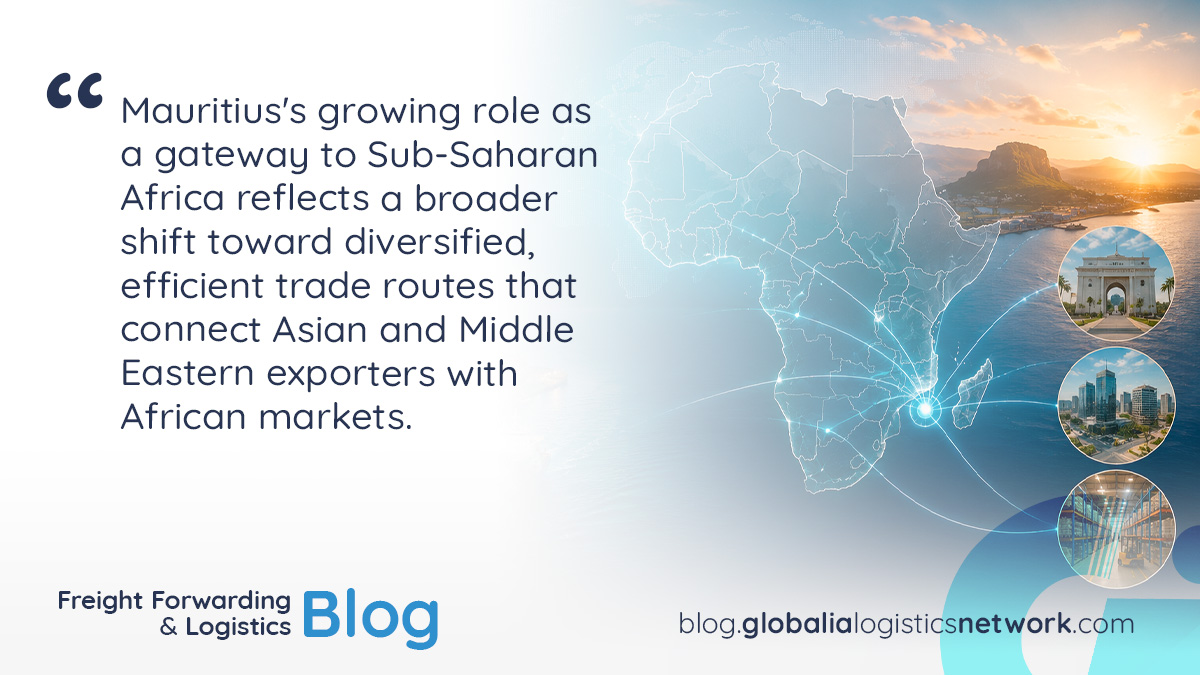
Mauritius’s growing role as a gateway to Sub-Saharan Africa reflects a broader shift toward diversified, efficient trade routes that connect Asian and Middle Eastern exporters with African markets. As demand for consolidated, duty-efficient distribution across the continent continues to strengthen, the corridor through Port Louis is positioned for sustained growth. Freight forwarders who build strong local partnerships and stay attuned to the operational realities of this route stand to gain a meaningful edge, offering clients the reliability and responsiveness that modern trade demands.